Incremental Analysis Framework
Need for Incremental Analysis
As described above, in the analysis of small-deformation problems, finite element analysis can be performed by using the principle of virtual work, which is equivalent to the fundamental equations such as the equilibrium equations, and discretizing this equation with finite elements. The same basic principle of virtual work is also used in the analysis of finite-deformation problems involving large deformation of structures.
However, in finite-deformation problems, even if material linearity is assumed, the equation of the principle of virtual work becomes nonlinear with respect to displacement. To solve nonlinear equations, iterative calculations are generally performed using an iterative method.
In these iterative calculations, an incremental analysis method is used in which the calculation is performed piecewise for small load increments and the increments are accumulated until the final deformed state is reached. When a small-deformation problem is assumed, no particular distinction is made between the configurations before and after deformation when defining strain and stress. That is, under the small-deformation assumption, it does not matter whether the configuration used to describe the fundamental equations is the configuration before or after deformation.
When incremental analysis is performed for a finite-deformation problem, the formulation differs depending on whether the initial configuration or the configuration at the start of the increment is taken as the reference configuration. The former is called the Total Lagrangian formulation, and the latter the Updated Lagrangian formulation. For details, refer to the references at the end of the chapter and related material.
Starting Equation: Principle of Virtual Work at Time \(t'\)
Consider an incremental analysis in which the state up to time \(t\) is known and the state at time \(t' = t + \Delta t\) is unknown (see Figure 2.2.1). The equilibrium equations, boundary conditions, and principle of virtual work at time \(t'\) (expressed in the current configuration using the Cauchy stress \(^{t'}\sigma\) and the linear part of the Almansi strain \(^{t'} A_{(L)}\)) are given in Principle of Virtual Work.
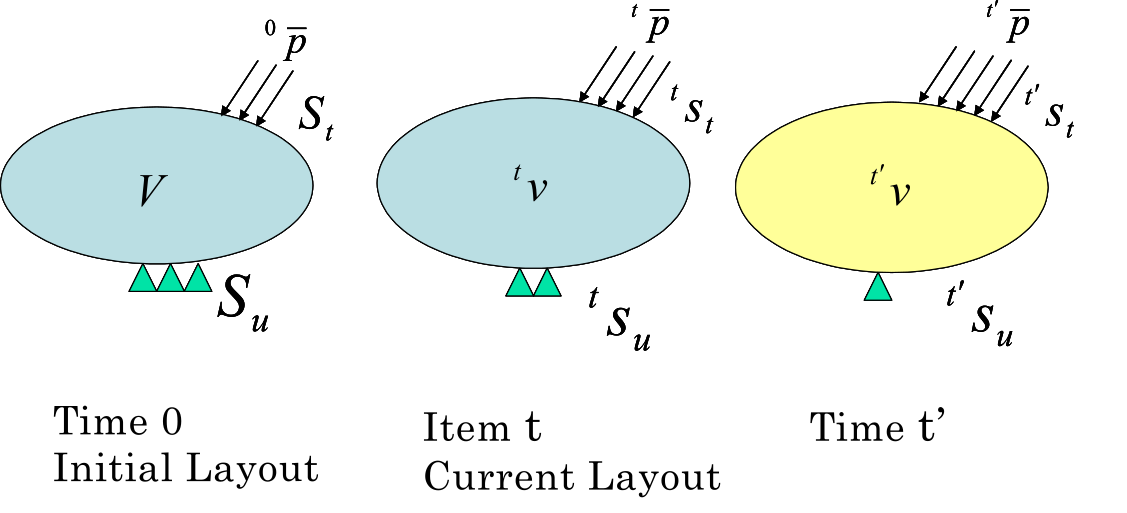
Figure 2.2.1 Concept of incremental analysis
However, because this starting equation is written in the (unknown) configuration at time \(t'\), the actual solution procedure selects either the initial configuration \(V\) at time \(0\) or the current configuration \(^{t'} v\) at time \(t\) as the reference configuration, rewrites the equation in incremental form, and then solves it:
- Total Lagrangian formulation — Uses the initial configuration \(V\) as the reference. The second PK stress \(\boldsymbol{S}\) and Green-Lagrange strain \(\boldsymbol{E}\) are used.
- Updated Lagrangian formulation — Uses the current configuration \(^{t}v\) at the start of the increment as the reference. The Cauchy stress \(\boldsymbol{\sigma}\) and the linear part of the Almansi strain \(\boldsymbol{A}_{(L)}\) are used.
For the spatial discretization of both formulations (B matrix and internal force vector), see Discretization of Internal Virtual Work; for linearization and construction of the tangent stiffness, see Tangent Stiffness Matrix.
See Also
- Principle of Virtual Work — Main starting equation (weak form in the current and initial configurations)
- Discretization of Internal Virtual Work — B matrices and internal force vectors for TL/UL
- Tangent Stiffness Matrix — \(\boldsymbol{K}^{tl}, \boldsymbol{K}^{up}\) obtained by linearization
- Newton-Raphson Method — Iterative algorithm